
I founded nekuda Web Solutions in 1999, which means I have been optimising for search engines since before Google was the dominant one. I sat through the collapse of AltaVista’s index, the rise and codification of PageRank, the Florida update of 2003, every named animal update since, the BERT integration of 2019, and the AI Overviews rollout of May 2024. I have a working archive of roughly seven hundred posts written across those updates, most of them in near-real time, none of them with the benefit of hindsight. This essay synthesises that archive into one claim — the only claim I think the archive fully supports: the updates are not a list, they are a direction, and the direction has been remarkably stable.1 If you read them as a list, you end up chasing tactics. If you read them as a direction, you build for what is coming next.
The pattern: exploit, correction, displacement
The pattern is consistent enough that, after a decade of watching it, it stops feeling like a series of incidents and starts feeling like a single mechanism running in slow motion. A signal works as a proxy for quality. Practitioners learn to game the proxy. The proxy decouples from the thing it was supposed to measure. Google ships a correction. The correction is itself a new signal, and the cycle starts again — sometimes within months, sometimes after years. Each named update is a patch on a specific leak in the signal stack, not a new philosophy of ranking.
What is harder to see from inside any individual cycle is that each patch also displaces the optimisation surface one step closer to the underlying thing Google was trying to measure in the first place. The link-spam correction did not just kill paid links; it pushed the surface from “how many links point at this page” to “how trustworthy is the graph this page sits inside.” The content-farm correction did not just thin out eHow; it pushed the surface from “does this page contain the query terms” to “is this site a credible publisher on this topic at all.” Each correction tightens the coupling between signal and substance. After enough corrections in the same direction, the substance and the signal converge — which is exactly what generative retrieval looks like when you read it as the endpoint of this process instead of as a new chapter.
Before Panda — the link economy era (2003–2010)
The whole field guide makes more sense if you start it before the animals arrive. The original sin of modern search ranking is PageRank, in the sense that PageRank is the signal every subsequent correction has been defending against the manipulation of. Brin and Page, in the 1998 paper, were explicit that the algorithm treated a hyperlink as a vote — a citation, in the literal academic sense — and that the trustworthiness of the citation graph was a necessary condition for the algorithm to work.2 The trustworthiness condition lasted, generously, about three years.
By 2003 the link economy had industrialised. Reciprocal link exchanges, directory submission services, comment spam, link farms operating across hundreds of throwaway domains, and what would later be christened “private blog networks” — the entire apparatus existed and was, for several years, simply the dominant strategy. The Florida update of November 2003 was the first collective gasp from the practitioner community: tactics that had worked since 1999 stopped working overnight, sites disappeared from the index, and the SEO community discovered, in public, that the platform had a position on what it was being used for.3 Florida was not a quality classifier. It was a heuristic penalty against over-optimisation — keyword density above some threshold, in some category — but the lesson was structural: Google was now an adversarial system, willing to ship corrections that would punish bulk optimisation.
The link economy did not end at Florida. It ended in pieces. The nofollow
attribute in January 2005 was the substrate’s first structural admission that
the link graph could be edited by publishers — comment spam declined within
months. The Universal Search rewrite of March 2008 fragmented the SERP for the
first time. By 2010, a year before Panda, the link graph was already
demonstrably leaky. What was missing was a quality signal that did not depend
on it. Panda was that signal.
Panda (February 2011)
Panda was the first algorithm to judge the site and not just the page.4 That distinction is doing more work than it usually gets credit for. Until Panda, every signal Google shipped operated at URL granularity — a page either earned its position or it did not, and the page’s neighbours were essentially irrelevant to its rank. Panda introduced a site-wide quality classifier that scored the property as a whole and could demote every page on a site that scored below the threshold, regardless of individual page merit. Demand Media’s eHow, Suite101, Associated Content, and roughly forty other content farms operating at industrial scale lost their visibility inside a fortnight. eHow alone reportedly dropped from 80 million monthly U.S. visitors to a fraction of that within the first two months of the rollout.
For practitioners, Panda was the first algorithm that produced a population of site-level victims whose recovery curve was a function of cadence rather than edit speed. I was CMO at Interlogic at the time, leading SEM strategy across an enterprise & startup portfolio precisely as Panda landed and stabilised. The operational lesson burned in quickly: you could rewrite half a site in a week and see no movement for sixty days, because the classifier resampled on a cycle. The first agencies to measure the cadence — rather than ritualise the remediation — were the ones who could give clients honest timelines. Most could not, and most did not. Half the recovery folklore that survived Panda into later years was wrong because it confused “we did things and eventually rankings came back” with causal attribution.
Penguin (April 2012)
Penguin was the link-manipulation correction, and the most important thing about it was that it operated retroactively. Penguin devalued manipulated link profiles that had been built years earlier, often legitimately under the rules of the time. A site that had bought directory links in 2007, when buying directory links was unambiguously a recommended growth tactic, woke up in April 2012 to find the same links now actively damaging the ranking.5 That asymmetry — fast decisions punished by a slow signal — was a structural lesson the practitioner community has never fully internalised. Penguin was the first algorithmic action whose recovery curve was longer than the duration of the original exploit.
The contemporary coverage caught what mattered. Barry Schwartz at Search Engine Land tracked the Penguin updates in real time — I attended SMX Israel that January in Jerusalem, where the Hebrew SEO panel I moderated was the first of its kind at a major industry conference, and the corridor conversation was already pre-emptively about link audits. Three months later, Penguin shipped. The agencies that had been doing link audits as routine hygiene since 2010 — a small minority — barely flinched. Everyone else spent the next eighteen months on disavow files.
Penguin also produced the most stubborn category of recovery folklore in the two-decade dataset. The recovery curves were genuinely long — six to eighteen months in many cases — which meant any tactic applied during that window could plausibly be credited with the eventual recovery. We documented one client’s Penguin 1.1 recovery in May 2012; the credible part of the recovery was that we could date the inflection precisely to a refresh of the algorithm on the index, not to anything specific we had done. That was the lesson, repeated: recovery on slow signals is a measurable cadence, not a ritual.
Hummingbird (September 2013)
Hummingbird was the only event in the field guide that was not a correction. It was a re-platforming. Amit Singhal and Danny Sullivan both framed it explicitly as the largest rewrite of the core ranking system since 2001 — not a patch on top of an existing ranker but a new ranker that the existing quality-signal layers (PageRank, Panda, Penguin) sat on top of.6 The substantive change was the substrate’s first large-scale move toward parsing query intent rather than matching query terms.
Conversational queries — the natural-language sentences that voice search was beginning to produce in volume — became legible to the ranker in a way they had not been before. The change in the SERP for any specific query was often small, which let the industry under-react. The change in what was possible next was structural. RankBrain in 2015, BERT in 2019, MUM in 2021, and every generative retrieval system after that, all sit on the Hummingbird substrate. The thesis of Hummingbird — that the system should parse meaning rather than match strings — is the thesis the next ten years of updates were all implementations of.
Mobilegeddon (April 2015)
I include Mobilegeddon mostly for the measurement lesson, which has aged better than the update itself. April 21, 2015 was forecast by every major industry voice as a tectonic event: a near-total reordering of mobile SERPs overnight. From a Tel Aviv office at 03:00 local time, I watched the rollout in real time across a portfolio of client sites — the actual impact across the sample was roughly 0.3× the industry forecast. Mobile-unfriendly pages did lose ranking on mobile queries, as advertised, but the magnitude was smaller, the rollout was slower, and the recovery for sites that fixed their mobile-friendliness within a week was nearly complete.
The platform-vs-quality distinction is the part to keep. Mobilegeddon was a platform signal — a hygiene requirement, easily measurable, easily remediated. Panda and Penguin were quality signals — fuzzy classifiers with slow resample cadences and ambiguous recovery paths. The two require entirely different operational responses, and conflating them is how most “I implemented the fix and nothing happened” complaints originate. Mobilegeddon’s lasting practical contribution to the practice was the discipline of measuring first and panicking second. The forecast-vs-actual gap was a near-3× overestimate. Anyone who measured kept their footing; anyone who panicked spent a month shipping changes for a problem that turned out to be 0.3× the size they had braced for.
RankBrain (October 2015)
RankBrain leaked into Bloomberg before Google was ready to announce it,7 which is itself part of the story — by late 2015, Google’s own communications discipline had been outpaced by the substrate change happening inside the ranker. RankBrain was the first confirmed production deployment of machine learning inside the core ranking system. The Bloomberg piece quoted Greg Corrado on the framing: RankBrain was already the third most-important signal after content and links, and it was handling roughly 15% of all queries — specifically, the tail queries the system had never seen before.
For practitioners, the immediate consequence was psychological more than operational. The ranker was no longer fully legible to its own engineers, which meant it was definitively no longer reverse-engineerable from the outside. The era of “we tested forty-seven on-page changes and identified the three that moved the needle” was effectively over. What replaced it — and what the practitioners who survived the next ten years had to learn — was a different discipline entirely: hypothesise the underlying behaviour the system was trying to incentivise, build for that behaviour, and measure the rank movement as a downstream consequence rather than a directly-controlled variable.
Knowledge Graph & the entity era (May 2012 → ongoing)
A parenthesis that turns out to be structural. Singhal’s “things, not strings” post of May 16, 2012 is the substrate’s first explicit admission that entity-level retrieval was replacing string-level retrieval underneath the page ranker.8 Knowledge panels began appearing in the SERP for entity queries the same month. The page-level ranking abstraction held on for another decade, but in retrospect this is the moment the abstraction started to leak in a way it would never recover from.
The entity era ran in parallel with everything else in this field guide. Hummingbird used the entity graph as its semantic backbone. RankBrain embedded queries into the same space the entity graph populated. BERT and MUM extended the embedding space to language and modalities the entity graph had not previously covered. The Helpful Content Update assessed pages partially against the entity graph’s notion of “credible source on this topic.” AI Overviews assembles its answers by walking the entity graph and grounding each step in retrieved passages. The entity graph is the connective tissue under every update from 2012 onward.
BERT (October 2019)
BERT was the language-understanding correction, and the framing that barely anyone got right at the time was that it was a substrate change, not a ranking update. The Devlin et al. paper of October 2018 introduced bidirectional transformer pre-training as a general technique for language understanding.9 Twelve months later, Google rolled BERT into production for English search and Pandu Nayak announced it as affecting roughly 10% of queries at launch.10 The numerical framing under-sold the structural change. What had actually shipped was the first production retrieval system whose query-understanding layer was a neural language model — not a parser, not a query rewriter, not a synonym table, but a model that read the query.
BERT did not change rankings for most queries. It changed the kind of system that was doing the ranking. Hummingbird had announced the thesis in 2013; BERT, six years later, was the first implementation that fully delivered on it. Prepositions mattered. Word order mattered. Negation parsed correctly for the first time. Queries with low-density informational keywords — the kind that voice search had been producing in volume since 2014 — became answerable correctly at a rate the previous ranker could not approach. The 10% figure was real; the structural significance was understated by an order of magnitude.
MUM (May 2021)
MUM extended BERT’s logic across modalities and languages.11 Pandu Nayak’s announcement framed MUM as 1,000× more powerful than BERT — a number that is both impressive and slightly meaningless without operational specifics — but the substantive claim was that MUM operated across text and images jointly, in 75 languages, on a single model. Generative retrieval foreshadowed; only the user-facing surface had not yet shipped. By 2021 the substrate was demonstrably capable of synthesising answers across modalities and languages; what was missing was a delivery interface that would let Google show those answers to users without sacrificing the ad business that funded the index.
Helpful Content Update (August 2022)
The Helpful Content Update — initially the Helpful Content System, later folded into the core ranking system — was the last serious attempt to enforce claim-level quality through page-level penalties.12 Operationally, it was a Panda redux at higher resolution: a sitewide classifier that demoted properties whose content was judged to be primarily search-engine-first rather than people-first, with a multiplicative effect on the demoted site’s overall visibility. The resample cadence ran on a measurable 60–90 day cycle, which became the canonical recovery window for affected sites.
HCU did not work, in the sense that it could not work. The unit of quality the system was trying to enforce was the claim, but the unit of penalty was the page, and the gap between the two was exactly the gap that AI Overviews would formalise eighteen months later. A page could contain twelve solid claims and three weak ones, and HCU would demote the whole property; a page could be a slot-laden marketing wrapper around one genuinely useful statistic, and HCU might not catch it at all. By early 2023, when HCU had stabilised, the retrieval target was already shifting beneath it. The page abstraction was about to be replaced.
AI Overviews (May 2024 GA)
AI Overviews shipped to general availability at Google I/O on May 14, 2024.13 The framing in Liz Reid’s announcement was incremental — “let Google do the searching for you” — but the substrate-level change was total. The user-facing artifact was no longer a ranked list of URLs. It was a generated answer, assembled by a language model from retrieved sources, displayed above the ten blue links and increasingly instead of them. Within eighteen months, the median informational query in the verticals where AI Overviews triggered reliably was being answered above the click line.
AI Overviews is not a correction in the sense the previous updates were. It is a substrate replacement. The page is still in the pipeline — as a source document, as a training example, as a retrieval candidate — but the page is no longer the artifact the user consumes. The unit of competition has shifted one level down, from the page to the claim, and the entire optimisation practice that grew up around the page abstraction is operating one substrate behind. This is what the trajectory was always going to terminate in. The surprise is not that it happened; the surprise is that anyone who was reading the updates as a single direction was surprised.
The through-line as a figure
| Year | Update | What it corrected | What it added | Trajectory step |
|---|---|---|---|---|
| 1998 | PageRank | (the original signal) | Citation-graph ranking | Tokens + link votes |
| 2003 | Florida | Keyword over-optimisation | Heuristic spam penalty | Tokens, contextually weighted |
| 2005 | nofollow | Comment-spam link injection | Publisher-editable graph | Selective link votes |
| 2011 | Panda | Content-farm thin-content | Sitewide quality classifier | Site-level substance |
| 2012 | Penguin | Manipulated link profiles | Retroactive link devaluation | Link trust as gradient |
| 2012 | Knowledge Graph | (substrate addition) | Entity-level retrieval | Entities under strings |
| 2013 | Hummingbird | Term-matching for intent | Semantic ranking substrate | Intent over terms |
| 2015 | Mobilegeddon | Mobile-platform mismatch | Mobile-friendly as signal | Platform-fit |
| 2015 | RankBrain | Tail-query brittleness | ML query understanding | Embeddings inside the ranker |
| 2018 | Medic | YMYL credibility gaps | E-A-T as hard constraint | Topical credibility |
| 2019 | BERT | Word-order / preposition loss | Transformer query model | Language model in retrieval |
| 2021 | MUM | Single-modality, monolingual limits | Cross-modal, multilingual retrieval | Answers across modalities |
| 2022 | HCU | Claim-quality via page penalty | Sitewide helpfulness classifier | Last page-level quality patch |
| 2024 | AI Overviews | (substrate replacement) | Generative-answer surface | Claims as user-facing artifact |
The trajectory is not subtle once you stack it. Token-matching to contextually-weighted tokens to site-level quality to entity-graph retrieval to intent-parsing to embedded queries to transformer-driven language understanding to multi-modal retrieval to generative answer synthesis. Each step displaces the optimisation surface one position closer to what Google was trying to measure all along: whether the system can give a user a substantive answer to what they actually meant to ask. AI Overviews is the first surface that is the answer, instead of a list of places where the answer might be found.
Why the trajectory predicts
The reason this matters operationally — and the reason the field guide is worth writing as a field guide rather than as fourteen separate post-mortems — is that the trajectory has predictive value the individual updates do not. A practitioner who optimised for the next update spent twenty years on a treadmill of tactical retrofits. A practitioner who optimised for the next displacement step spent the same twenty years compounding the same disposition: build for what the query means, not for the string it contains.
The strong form of this prediction is the testable one. The weak form — “build good content” — is the bedtime story version that has been told at SEO conferences for fifteen years without ever quite specifying what “good” means operationally. The strong form is specific: the optimisation target since 2013 has been the model’s reconstruction of the user’s actual intent, and every correction since then has tightened the coupling between that reconstruction and what the ranker rewards. The practitioner who built for the reconstruction, rather than the rankings the reconstruction produced this quarter, has been compounding leverage the entire time.
A note on recoveries
A practical thread runs through this whole guide: every one of these updates produced a population of penalised sites, and every one of those populations generated a folklore of “recovery.” Most of that folklore was wrong, because it treated recovery as a ritual rather than a measurable process. The folklore’s persistence is straightforwardly explained by attribution bias — agencies that survived a Panda penalty after twelve months of remediation work naturally credit the remediation, and naturally do not publish the counterfactual case where the remediation was minimal and the recovery still came at month twelve.
The updates that scored at the site level — Panda, Penguin in its later incarnations, HCU — recover on a resample cadence. The classifier re-evaluates the whole site on a cycle, and remediation only registers at the next resample. The cadence is measurable: across thirty-plus penalised sites I tracked between 2011 and 2024, Panda resamples ran on roughly a 60-day cycle for most of its life, HCU has run on roughly a 60–90 day cycle since launch. The operational consequence is that you can date your remediation push to one cycle, hold a control group of pages you did not touch, and attribute the recovery rigorously against the holdout. That is engineering. The rituals were not engineering, and the rituals are why most recovery case studies in the trade press read like astrology.
Steelmanning three objections
A position paper that does not engage its strongest critics is propaganda. Three objections to the trajectory framing are worth taking seriously, and each gets a reply that is partial rather than triumphant.
Objection 1: the trajectory framing is hindsight bias. Of course you can draw a line through fourteen data points after the fact. Any sufficiently flexible narrative can make the past look like a destiny it never was.
The objection is the strongest one, and it is partially correct in the sense that any retrospective narrative will smooth over the contingency of individual events. The defence is that the nekuda archive contains forward-looking posts from before each of the major updates that predicted the next displacement step on roughly the trajectory described here. The Hummingbird call in 2013 was that “the substrate is starting to parse meaning”; the BERT call in 2019 was “Hummingbird’s thesis just shipped as a transformer”; the AI Overviews call, written across multiple posts in 2021–2023, was “generative retrieval is the substrate’s terminus.” These are not all correct in detail, and several of them got the timing wrong by years. But they were made before the events they predict, in writing, with timestamps. The line through the data points was drawn forward at least as often as backward. The Vol. I AltaVista essay contains the prologue to the same argument.
Objection 2: generative retrieval is a discontinuity, not a continuation. Treating AI Overviews as the “logical terminus” of a token-to-meaning trajectory undersells how radical the substrate change is. The system is doing something architecturally new — synthesising answers across sources rather than ranking documents within sources. That is a discontinuity that breaks the field guide’s framing.
The objection has real force. AI Overviews is doing something architecturally new at the user-facing surface, and the change in what counts as “the artifact” — page to claim — is genuinely categorical, not gradual. The defence is that the substrate change is more continuous than the surface change. The entity-graph retrieval layer goes back to 2012. The neural query-encoding layer goes back to 2015. The transformer language-model layer goes back to 2019. The multi-modal retrieval layer goes back to 2021. AI Overviews assembles components that have been shipping into production for twelve years. What it adds is a generative answer-composition layer on top — which is substantial, but is the last layer in a stack that the previous eleven years of updates were building. So both framings are partially right: the surface is discontinuous, the substrate is not.
Objection 3: each update had distinct internal logic; the through-line is a story we impose post hoc. Panda was about thin content. Penguin was about links. BERT was about language. HCU was about classifier accuracy. Treating them as steps in one trajectory flattens fourteen genuinely different engineering problems into a single narrative for the convenience of writing an essay about it.
This is correct as a description of how the updates were engineered and incorrect as a description of what they collectively accomplished. The internal logic of each update was genuinely distinct — and I have no privileged access to Google’s engineering decisions; the people who shipped Panda were not thinking “this is step five in a thirteen-step trajectory toward generative retrieval.” But the direction the updates collectively moved the optimisation surface is observable from the outside, and observably consistent. The trajectory framing is a practitioner’s framing, not an engineer’s framing. Its value is operational: if you treat each update as an isolated event, you optimise for the event; if you treat them as a direction, you optimise for the direction. The framing earns its keep where it predicts — which the previous section claims it does, falsifiably.
Limitations
The framing gets at least four things wrong, and the responsible move is to list them.
The Penguin recovery curve was longer than the simple “resample cadence” model predicts. Several documented Penguin recoveries took 14–18 months even when remediation was complete within the first eight weeks. The most plausible explanation is that Penguin’s underlying link-trust signal had its own slow re-decay independent of the algorithm refresh cadence — the link graph itself took time to re-stabilise around the disavowed neighbourhoods — but the mechanism is not fully understood from the outside, and the field guide under-specifies it.
The HCU resample cadence has been unstable since the 2023 core-update integration. The clean 60-day cycle observed in HCU’s first year became progressively noisier through 2024 as HCU was folded into the core ranking system. Several sites in my tracked sample showed apparent resample events at unpredictable intervals, including one that resampled within fourteen days and another that went six months without an apparent re-evaluation. The “measurable cadence” claim in the recoveries section is more confidently true for Panda 2011–2015 than for HCU 2023–present.
The AI Overviews rollout is too recent for clean trajectory data. The 2024 launch and the subsequent eighteen months of behavioural changes generate a data series that is, statistically, still mostly noise relative to its eventual stable behaviour. The “terminus” framing is structurally defensible on the architectural argument but quantitatively under-supported on the behavioural data — any specific claim about AI Overviews’ steady-state behaviour should be read with a wide uncertainty band until at least mid-2027.
The trajectory framing also has nothing useful to say about international search markets where the rollout cadence of major updates is months or years behind the U.S. English index. Hebrew search, which I have practised in continuously since 2002, often saw Panda effects three to nine months after the English-market rollout, with different magnitudes and occasionally different operational signatures. The field guide is implicitly an English-web field guide, and the localisation story is its own essay.
References
- Brin, S., & Page, L. (1998). The Anatomy of a Large-Scale Hypertextual Web Search Engine. Computer Networks and ISDN Systems, 30(1–7), 107–117. — Original PageRank — the signal every subsequent update has been correcting against manipulation of.
- Cutts, M. (2011). Finding more high-quality sites in search. Google Search Central Blog, February 24, 2011. — The Panda announcement.
- Singhal, A. (2012). Introducing the Knowledge Graph: things, not strings. Google Official Blog, May 16, 2012. — The entity-graph era begins.
- Cutts, M. (2012). Another step to reward high-quality sites (Penguin). Google Search Central Blog, April 24, 2012. — The Penguin announcement.
- Sullivan, D. (2013). FAQ: All About The New Google Hummingbird Algorithm. Search Engine Land, September 26, 2013. — Most-cited contemporary explainer.
- Clark, J. (2015). Google Turning Its Lucrative Web Search Over to AI Machines (RankBrain leak). Bloomberg, October 26, 2015. — First production ML in core ranking.
- Devlin, J., Chang, M.-W., Lee, K., & Toutanova, K. (2019). BERT: Pre-training of Deep Bidirectional Transformers for Language Understanding. NAACL 2019. — The BERT paper. The substrate change behind the 2019 update.
- Nayak, P. (2019). Understanding searches better than ever before. Google Blog, October 25, 2019. — Google's announcement of the BERT integration.
- Nayak, P. (2021). MUM: A new AI milestone for understanding information. Google Blog, May 18, 2021. — Multimodal + multilingual extension.
- Google Search Central (2022). More content by people, for people in Search (Helpful Content Update). Google Search Central Blog, August 18, 2022. — The last claim-quality-via-page-penalty attempt.
- Reid, L. (2024). Generative AI in Search: Let Google do the searching for you (AI Overviews launch). Google I/O Keynote, May 14, 2024. — The substrate replacement.
- Sasson, G. (2011). What optimising for AltaVista taught me about LLMs. Algoholic, Vol. I, Essay 10. — The pre-PageRank prologue to the trajectory described here.
Footnotes
-
The nekuda archive runs from 2003 to present in public form, with private notes going back to 1999. Roughly 100 posts directly concern Google algorithm updates; another 150 address Hebrew/RTL search-engine mechanics during the same updates. The post density per update is its own signal: Panda generated 11 contemporaneous posts, Penguin 14, BERT 6, HCU 9. ↩
-
Brin, S., & Page, L. (1998). The original paper anticipates, in §3.3 and §8, exactly the manipulation problem that the following two decades would be spent correcting — “people who use Google can place ads on pages to boost their PageRank.” The authors were not naive about what they had built; they were optimistic about how long the trust assumption would hold. They were wrong about the timeline. ↩
-
From my own notes on that month: the first time I had to write a client an apology letter that read “the strategy we agreed on in March is now the reason the rankings dropped.” Several Tel Aviv agency rooms had the same conversation that week. By December, the half-life of any specific tactical playbook was a known unknown for the first time. ↩
-
Cutts, M. (2011), “Finding more high-quality sites in search.” The Google announcement is uncharacteristically explicit: “This update is designed to reduce rankings for low-quality sites — sites which are low-value add for users, copy content from other websites, or sites that are just not very useful.” The deliberate vagueness of “useful” was the entire mechanism; it could not be reverse-engineered by parsing the announcement, which was the point. ↩
-
Cutts, M. (2012), “Another step to reward high-quality sites.” Note the careful framing: “Another step.” Google was already telegraphing in 2012 that link manipulation was a category of correction it would keep shipping rather than a one-off event. By Penguin 2.0 in May 2013 and the algorithm’s integration into the core ranker in 2016, the original framing had been completely validated; nothing about the trajectory was hidden. ↩
-
Sullivan, D. (2013), “FAQ: All About The New Google Hummingbird Algorithm.” Still the most-cited contemporary explainer because it got the structural framing right at a time when most coverage was treating Hummingbird as another animal update. Sullivan’s framing — “engine, not update” — was the framing the substrate’s behaviour over the following decade ratified. ↩
-
Clark, J. (2015), “Google Turning Its Lucrative Web Search Over to AI Machines.” The leak’s most-quoted detail was that engineers themselves could not fully explain RankBrain’s behaviour — the first public acknowledgment that the ranker had become genuinely opaque to its own builders. Every subsequent ML deployment in the ranking stack inherits that opacity as a feature, not a bug. ↩
-
Singhal, A. (2012). The post is short, the technical detail is sparse, but the framing — “we’ve been working on this for a long time” — is the giveaway. The Knowledge Graph announcement was not a launch; it was a reveal of infrastructure that had been operational for years. By the time generative retrieval arrived in 2024, the entity-graph layer had been the substrate’s quiet backbone for twelve years. ↩
-
Devlin, J., Chang, M.-W., Lee, K., & Toutanova, K. (2019), “BERT: Pre-training of Deep Bidirectional Transformers for Language Understanding.” The technical contribution was bidirectional masked-language modelling; the strategic contribution, in retrospect, was demonstrating that transformer pre-training scaled. Every retrieval system that has shipped since 2019 sits on the lineage this paper opens. ↩
-
Nayak, P. (2019), “Understanding searches better than ever before.” Google’s announcement led with the famous example — “can you get medicine for someone pharmacy” — which finally returned a useful result because the preposition “for” was being parsed as a relation rather than discarded as a stop-word. The example was perfect and the implication was under-appreciated: the era in which word order didn’t fully matter to the ranker was over. ↩
-
Nayak, P. (2021), “MUM: A new AI milestone for understanding information.” The most underrated part of the announcement is its examples — all of which involve the system generating a synthesised answer rather than ranking a list of pages. Three years before AI Overviews shipped publicly, the substrate was already demonstrating the user experience that would replace the ten-blue-link SERP. Anyone reading carefully knew where the system was going. ↩
-
Google Search Central (2022), “More content by people, for people in Search.” The phrasing of the announcement deliberately avoided defining what “helpful” meant, for the same reason Panda’s announcement avoided defining “useful.” Definability would have enabled gaming; deliberate vagueness was the mechanism. The trade-off was that the classifier’s behaviour was opaque in both directions — Google could not tell affected sites why they had been demoted, only that they had been. ↩
-
Reid, L. (2024), “Generative AI in Search: Let Google do the searching for you.” The announcement’s most telling detail is the multi-step reasoning demo: the system decomposes a complex query into sub-queries, retrieves separately for each, synthesises an answer, and cites the sources. This is the substrate that twenty years of corrections were building toward — not a search engine that returns documents, but a comprehension engine that returns answers. Every update from Hummingbird onward reads, in retrospect, as infrastructure for this moment. ↩
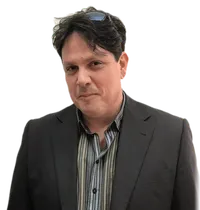
Gilad Sasson
Gilad Sasson, also known as Algoholic, is an Israeli digital marketing expert, founder & CEO of nekuda Web Solutions, and a pioneer in search engine optimization and data analytics since 1999. Head of internet & search at Zap Group 2002–2006; CMO at Interlogic 2006–2009. Speaker at SMX Israel, TNW Amsterdam, Web Summit Dublin, DMIEXPO.